Why the Gulf Has Become Private Aviation's Crossroads
With a JETPAX home in Dubai, a view on why the region has quietly become one of the most important hubs in private flight.
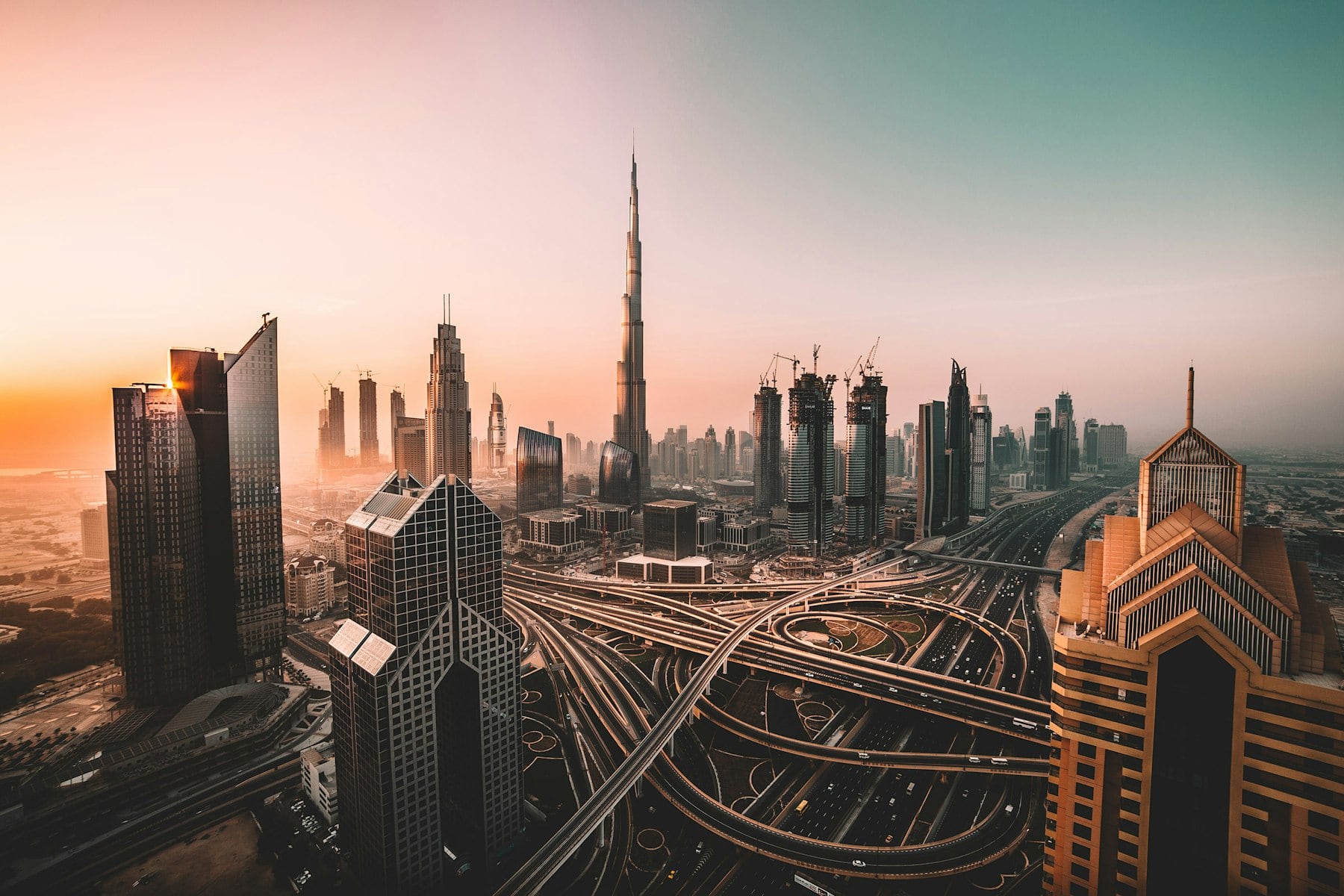
Look at a map of the world's air routes and the Gulf sits almost exactly in the middle of everything. Europe, Africa, South Asia and the Far East are all within comfortable range, which is precisely why the region's airlines built the modern long-haul network around it. Private aviation has followed the same logic — and Dubai, in particular, has become a crossroads in the truest sense.
Built for the private traveller
What sets the Gulf apart is not just geography but readiness. Dedicated business-aviation terminals, around-the-clock handling and an unembarrassed appetite for the bespoke make it one of the smoothest places anywhere to arrive privately. Al Maktoum's business-aviation facility offers among the quickest airside-to-car experiences in the world; for many of our clients, it has reset the expectation of what arrival should feel like.
A staging point for everything beyond
The region's real value is as a pivot. From the Gulf, the Maldives is a little over four hours; Europe around seven; the Far East and the eastern seaboard of Africa comfortably within reach. It is the natural place to break a long journey, change aircraft, or simply pause for a few days in a city built for it. As a JETPAX home, it is also where a great deal of our knowledge lives — which airfield, which hour, which aircraft for the leg beyond.
The infrastructure, by name
The centre of gravity is Al Maktoum International — DWC, on the city's southern flank — and the Mohammed bin Rashid Aerospace Hub that has grown up around it. Five FBOs now operate there: Jetex, Jet Aviation and Falcon Aviation within the VIP Terminal, with DC Aviation Al-Futtaim and ExecuJet running dedicated facilities of their own. That depth of competition, inside a single precinct, exists almost nowhere else in the world.
Jetex's flagship sets the register. It is the largest FBO in the company's worldwide network, the first in Dubai to hold IS-BAH certification — the industry's benchmark for ground handling — and it will, if you wish, take you airside to the aircraft door by Rolls-Royce. The theatre is not the point. The point is that arrival and departure have been engineered down to minutes, with customs handled in the terminal around the clock.
The hub itself is one of seven districts of Dubai South, the master-planned city around the airport, and its infrastructure is roughly 70 per cent built; much of what remains is hangarage and workshop space. Capacity, in other words, is being added ahead of demand rather than behind it.
A market moving in one direction
The numbers support the impression. The aerospace hub recorded 20,289 business-aviation movements in 2025 — a 17 per cent increase on the year before, and the highest level of private-jet activity ever recorded in Dubai. Al Maktoum remains the busiest business-aviation airport in the Middle East, and the pace quickened through the year, with the final quarter up 18 per cent.
Demand here also moves in surges, and the surges are instructive. In early 2026, with commercial schedules across the region disrupted, Skift reported charter requests in the UAE jumping by as much as 300 per cent in a matter of days. The figure will settle; the reflex will not. When travel in this part of the world becomes complicated, the market reaches for private capacity first.
The industry is organised to match. MEBAA — the Middle East and North Africa Business Aviation Association, founded in Dubai in 2006 — now represents more than 270 companies across the region, and its show returns to Dubai in December 2026 as a fixture of the global business-aviation calendar. This is not a frontier market. It is an established one, with the institutions to prove it.

The Australian corridor
For an Australian traveller, the Gulf's relevance is not abstract. Sydney to Dubai is a little over 12,000 kilometres — about 6,500 nautical miles — and for decades that distance meant an airline, full stop. The newest ultra-long-range jets have changed the arithmetic: a Gulfstream G650ER, with 7,500 nautical miles of range, or a Bombardier Global 7500, with 7,700, will fly it non-stop.
More often, though, the Gulf earns its keep as the pause. Break the journey in Dubai and Australia-to-Europe stops being a single feat of endurance and becomes two civilised sectors, with a night's sleep, a day of meetings or a change of aircraft in between. The same logic runs in reverse for the Gulf's own travellers heading south for an Australian summer. A crossroads is only useful if you know how to use it; that, in large part, is why we are there.

None of this is an accident, and none of it is finished. The Gulf has spent two decades positioning itself at the centre of global aviation, and the private end of the market has quietly become one of the clearest beneficiaries. For the traveller moving between worlds, there are few better places to do it from.
Fly with JETPAX
Bespoke private charter, arranged in a single call — the aircraft, the crew and every detail of the flight.
Make an enquiryKeep reading