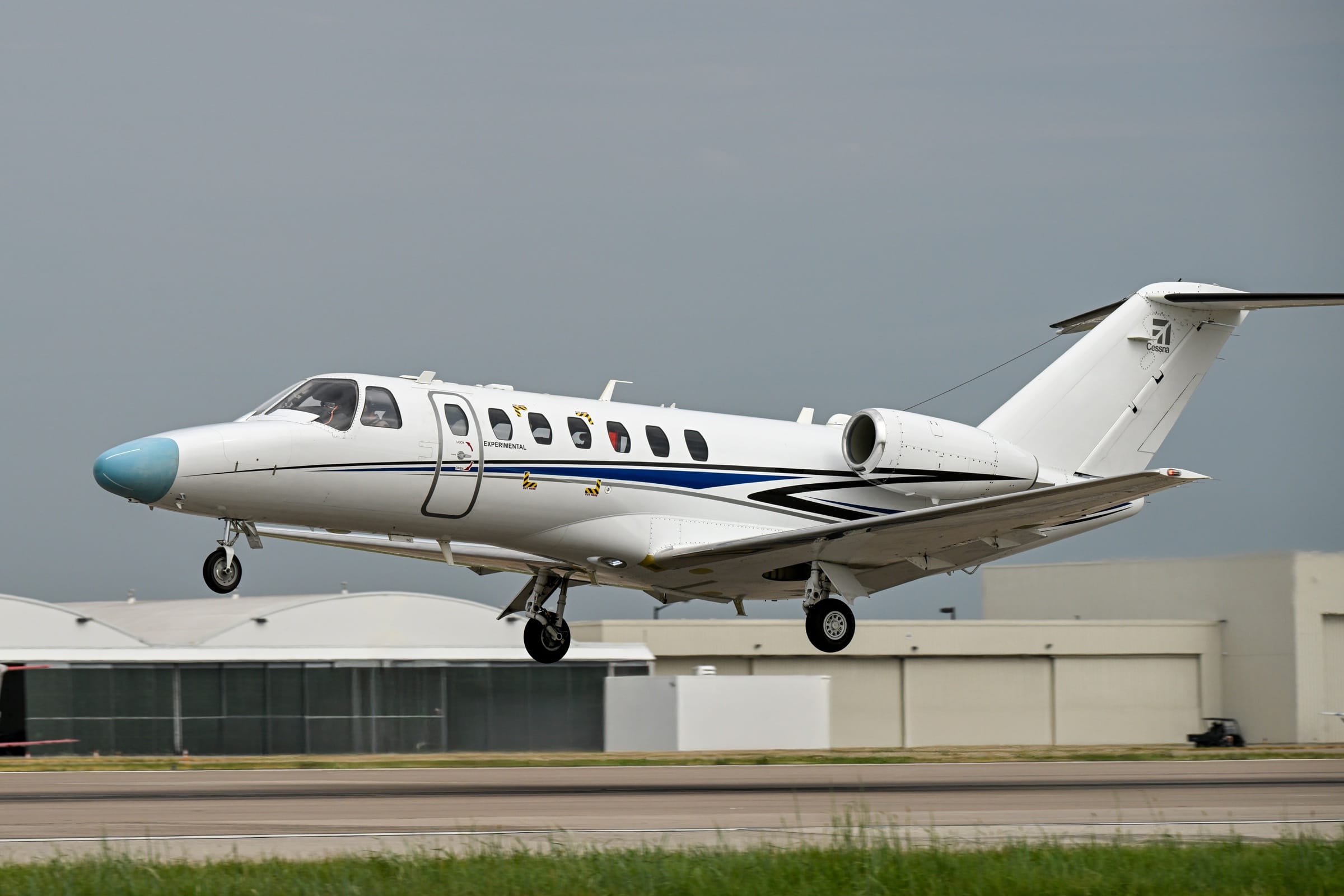
Embraer Phenom 300EV: The Best-Selling Light Jet Just Got Smarter
Embraer has launched the Phenom 300EV — the third evolution of the world's best-selling light jet, bringing Garmin Emergency Autoland, more range and more payload, with deliveries from 2028. What the new flagship light jet means for Australian owners and charterers.

The evolution of a habit Embraer can't break
Embraer has done it again. On 14 July 2026, announced from its Executive Jets headquarters in Melbourne, Florida, the Brazilian manufacturer pulled the covers off the Phenom 300EV — the third and most advanced evolution of the aircraft that has dominated the light-jet category for 14 consecutive years. With a list price at launch of US$13.995 million, first deliveries slated for 2028, and a safety package unlike anything else in its class, the 300EV isn't just an update. It is a statement of intent from a jet that has nothing left to prove — and keeps proving it anyway.
The lineage runs deep. The original Phenom 300 entered service in December 2009; the 300E arrived in 2018 and was further enhanced in 2020. Nearly 1,000 Phenom 300-series jets have been delivered worldwide, flying in around 70 countries with nearly three million flight hours behind them — a streak confirmed again in 2025, when Embraer delivered 72 Phenom 300-series aircraft, its highest annual output in a decade.
The "EV" designation signals evolution rather than revolution — and that is exactly what buyers of the world's most popular light jet want. The 300EV keeps the proven twin Pratt & Whitney Canada PW535E1 turbofans and Mach 0.80 top speed of the 300E, while layering on genuinely class-leading safety technology, more range, more payload, and a smarter cabin.
The headline: Garmin Emergency Autoland
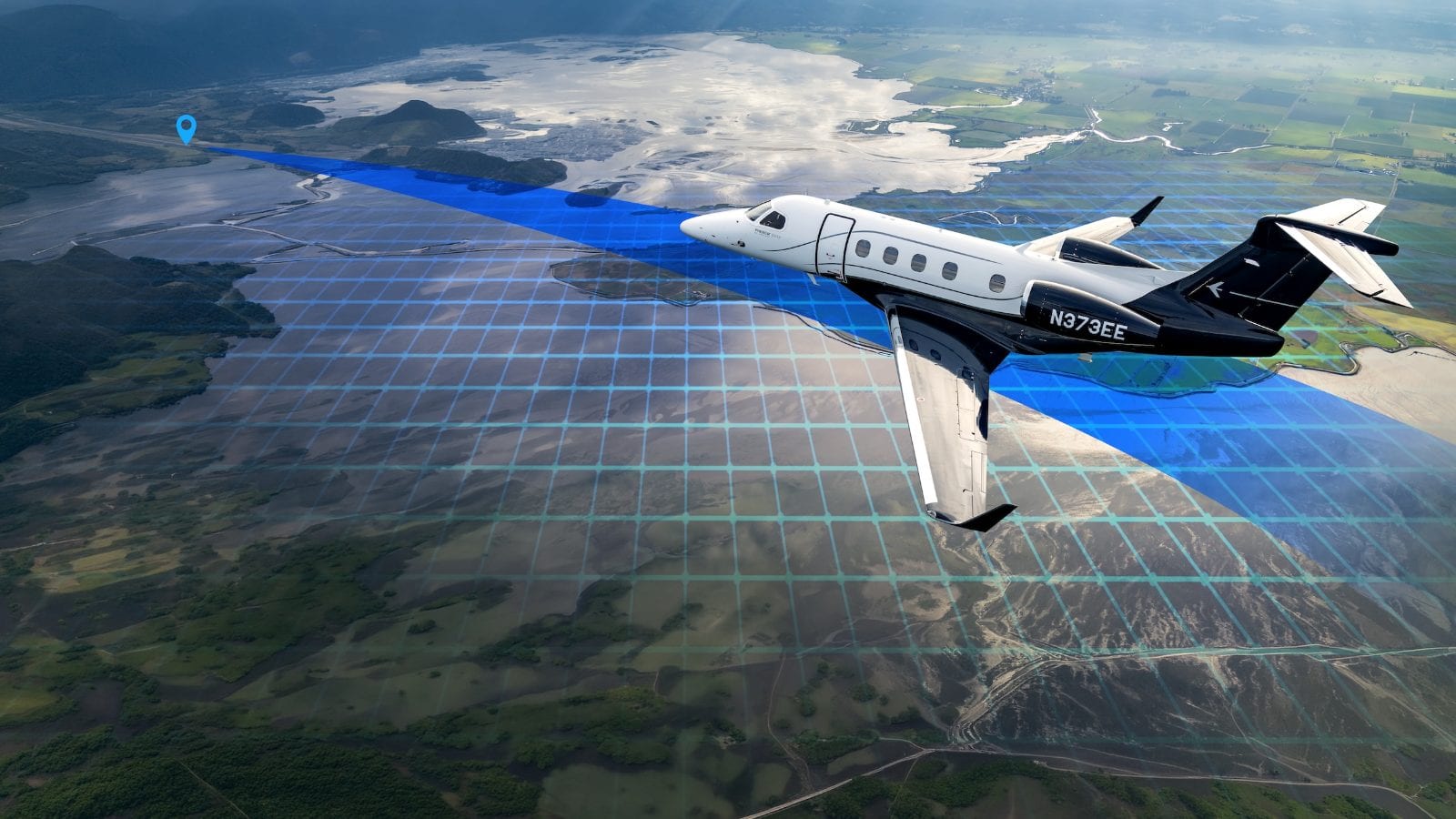
The showstopper is Garmin Emergency Autoland, making the Phenom 300EV the largest business jet equipped with the system. If the pilot becomes incapacitated, the system is activated at the push of a button — or engages automatically — then communicates with air traffic control, selects a suitable airport, and lands the jet itself. For a single-pilot-certified aircraft flown by owner-pilots and lean flight departments alike, it is a genuine peace-of-mind breakthrough.
Autoland is joined by two more class-exclusive systems enabled by Embraer's new Multi-Purpose Electronic Controller: rudder-by-wire, which replaces traditional cables and pulleys with electronic control, and a fully integrated Autobrake for more consistent, shorter, smoother stops on take-off rejections and landings.
The numbers that matter
Range rises to 2,055 nautical miles with NBAA IFR reserves — 45 more than the 300E — while an increase in maximum zero fuel weight adds roughly 430 pounds (195 kg) of payload. The jet carries up to 11 occupants, holds a maximum cabin altitude of 6,600 feet — among the lowest in the class — and remains single-pilot certified. Embraer expects FAA, EASA and Brazilian ANAC certification before the end of 2026, with the order book opening shortly and first deliveries from 2028.
The flight deck is built around the Garmin G3000 Prodigy Touch avionics suite, now enhanced with 3D taxiway routing, Runway Occupancy Awareness, a Synthetic Vision Guidance System, FANS 1/A+, RNP AR 0.3 capability, autothrottle, a new inertial reference system and Emergency Descent Mode.
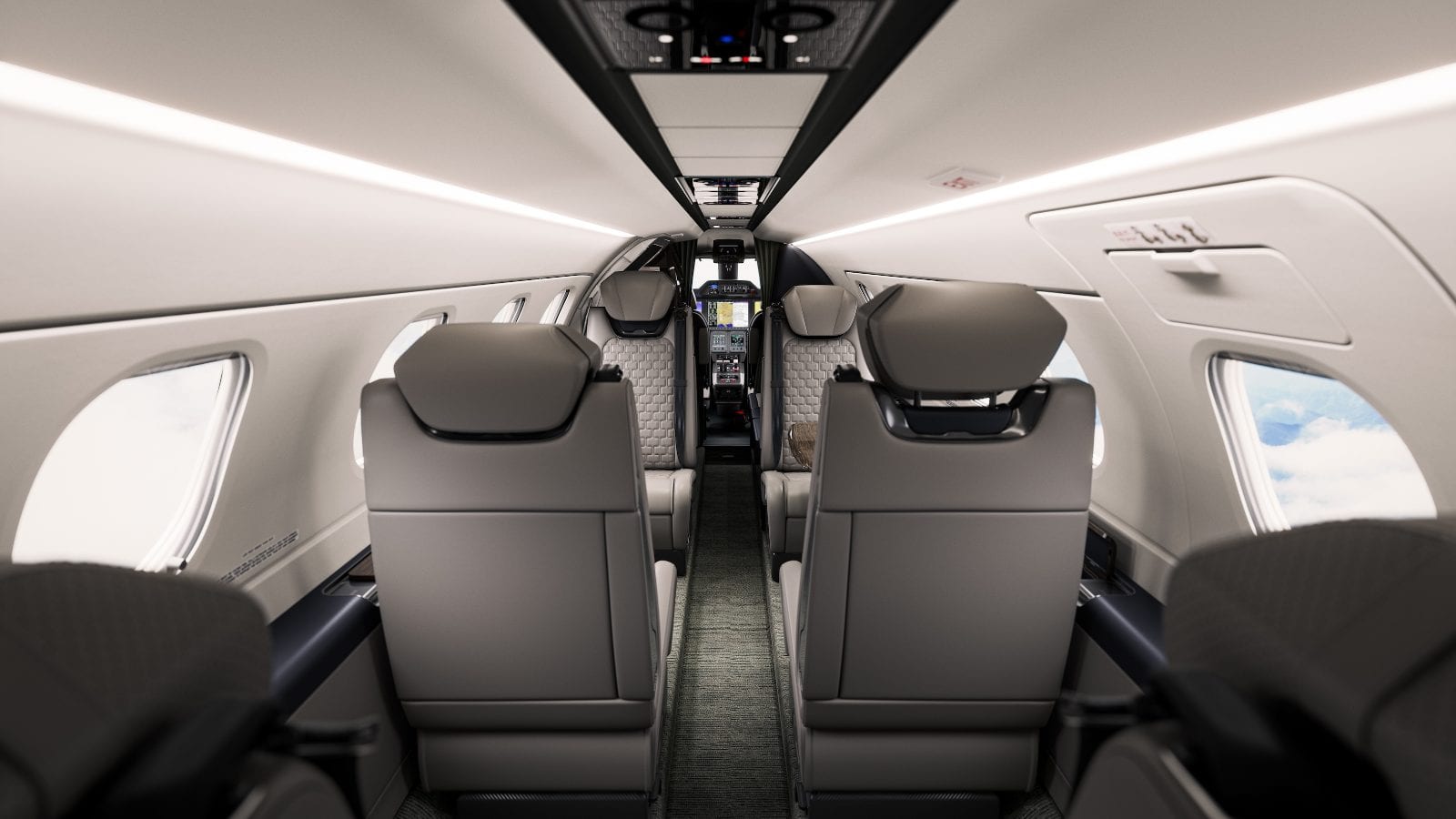
In the cabin, Embraer has answered customer feedback directly: an odourless vacuum lavatory, improved temperature control, an air-ionisation system, and a redesigned refreshment centre that accommodates an owner-chosen espresso or Keurig machine. True Blue Power lithium-ion batteries and LED taxi and landing lights round out the systems, while factory-fitted Gogo Galileo HDX satellite connectivity keeps passengers streaming at altitude, with Starlink available as an aftermarket option.
A jet that keeps breaking records
The Phenom 300EV arrives on the back of extraordinary commercial momentum. Embraer's executive-jet division delivered a record 155 business jets in 2025, and the second quarter of 2026 was its strongest Q2 in 16 years, with 45 executive jets handed over — 20 of them Phenom 300-series aircraft. Embraer is guiding for 160 to 170 executive-jet deliveries across 2026 and has flagged further production increases to meet demand.
Roughly 30 per cent of Phenom 300 sales go to fleet operators, with the balance bought by private owners and corporate flight departments — a mix that speaks to the jet's rare ability to satisfy both hard-nosed operators watching cost per hour and owners who simply want the best light jet money can buy. Given the pace at which Phenom delivery positions have historically been snapped up, buyers wanting an early 300EV slot will need to act decisively.
What the Phenom 300EV means for Australia
Australia has long been Phenom country. The first Australian-based Phenom 300E was delivered in 2018 to a Queensland operator, with a Sydney-based example following in 2019, and the type has since become one of the most sought-after light jets in the Australian charter market — flown by operators around the country and consistently among the most requested aircraft for domestic executive charter.
It is easy to see why. The Phenom 300 series combines short-runway performance suited to Australia's regional strips with the speed and cabin comfort to make the east-coast triangle — Sydney, Melbourne, Brisbane — feel effortless. The 300EV's extended 2,055-nautical-mile range strengthens the case further: transcontinental pairs such as Sydney–Perth sit within reach in typical conditions, and trans-Tasman missions carry comfortable reserves.
For Australian buyers, the 300EV's single-pilot certification and Emergency Autoland are particularly compelling given the long, remote sectors that define flying here. Expect Australian operators and private buyers to be watching the 2028 delivery slots closely — and expect the used Phenom 300 and 300E market, already one of the tightest in business aviation, to stay hot as the fleet ages gracefully rather than cheaply.
Buy, or charter?
At its US$13.995 million list price, the Phenom 300EV squares up directly against Cessna's Citation CJ4 Gen3 — which will also carry Garmin Autoland — but brings a larger cabin cross-section, a lower cabin altitude, and the residual-value security of the best-selling light jet on Earth. For buyers, that pedigree matters: Phenoms hold value like few other jets in any category.
For everyone else, the good news is that the Phenom experience is already available in Australia today through the existing 300 and 300E charter fleet — and the 300EV will only deepen that pool from 2028. Thinking about chartering a Phenom 300, or want to talk through what the 300EV means for your ownership plans? Speak to JETPAX — acquisitions and charter are both our craft, and every conversation starts with your mission, not a brochure.
Fly with JETPAX
Bespoke private charter, arranged in a single call — the aircraft, the crew and every detail of the flight.
Make an enquiryKeep reading